Receiving a heart diagnosis can feel like the world has shifted beneath your feet. Whether it's angina, a heart attack, heart failure, or another cardiac condition, many people assume that exercise is now off limits - that their heart simply cannot handle the strain. This is one of the most common misconceptions in cardiac care. The evidence consistently shows that appropriate exercise is not just safe after most heart diagnoses - it is one of the most effective treatments available. This guide walks you through the evidence, the safety considerations, and the practical steps to exercise confidently with a heart condition.
Why Exercise Helps Your Heart: What the Evidence Shows
It might seem counterintuitive, but exercise is genuinely medicine for your heart. The British Heart Foundation describes physical activity as one of the most important things you can do after a cardiac event. Here is what the research tells us.
Regular, appropriate exercise after a heart diagnosis can:
- Reduce mortality risk: Studies show cardiac rehabilitation exercise programmes reduce cardiovascular mortality by 26% compared to usual care alone
- Improve heart function: Your heart becomes more efficient at pumping blood, reducing the workload with every beat
- Lower blood pressure: Regular aerobic exercise can reduce systolic blood pressure by 5-10 mmHg - comparable to some medications
- Improve cholesterol profile: Exercise raises protective HDL cholesterol and can lower harmful LDL cholesterol and triglycerides
- Reduce inflammation: Chronic inflammation contributes to heart disease progression; regular exercise has powerful anti-inflammatory effects
- Improve mental health: Depression is common after cardiac events and worsens outcomes; exercise is a proven mood lifter
The NHS and NICE guidelines both recommend exercise as a core component of cardiac rehabilitation. This is not alternative medicine - it is standard evidence-based care endorsed by every major cardiology organisation worldwide.
Getting Clearance: Working with Your Cardiology Team
Before you lace up your trainers, a conversation with your medical team is essential. This is not about seeking permission - it is about getting personalised guidance that makes your exercise safe and effective.
Your cardiologist or GP can help you understand:
- Your specific condition: Different heart conditions have different exercise considerations - what works for angina may differ from heart failure
- Medication interactions: Beta-blockers affect heart rate response during exercise; your team can advise on adjusting targets
- Exercise testing: Many people benefit from a supervised exercise stress test before starting, which reveals your safe exercise capacity
- Cardiac rehabilitation referral: If you have not already been referred, ask about cardiac rehab - it is the gold standard starting point
- Monitoring devices: If you have a pacemaker or ICD, there may be specific exercise considerations
Many people find that once they have had this conversation, their confidence increases dramatically. Knowing your limits - and discovering they are often wider than expected - is empowering.
Types of Exercise for Heart Health
A well-rounded cardiac exercise programme includes three types of activity. Each contributes differently to your heart health and overall wellbeing.
Aerobic Exercise: The Foundation
Aerobic activity is the cornerstone of cardiac exercise. It strengthens your heart muscle, improves circulation, and builds endurance for daily activities.
- Walking: The most accessible and well-studied exercise for heart patients - start with 10-minute walks and build gradually
- Cycling: Low impact and easy to control intensity - stationary bikes allow exercising regardless of weather
- Swimming: Excellent for those with joint problems; the water supports your weight while providing resistance
- Dancing: Social and enjoyable; many community centres offer gentle dance classes
The British Heart Foundation recommends building towards 150 minutes of moderate aerobic activity per week. Moderate means you can talk but not sing during the activity. Start well below this target and increase gradually over weeks and months.
Strength Training: Building Resilience
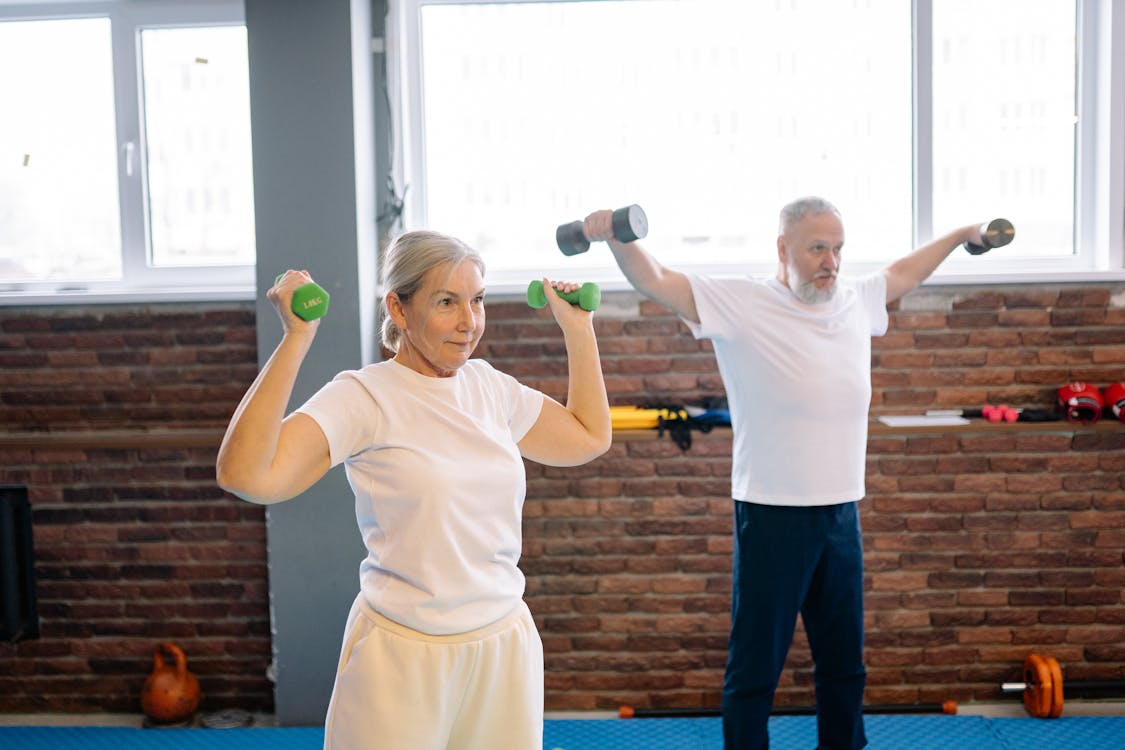
Strength training was once discouraged for heart patients, but current evidence strongly supports its inclusion. Building muscle helps with daily tasks, supports joint health, and improves metabolic function.
- Use light to moderate weights or resistance bands
- Focus on higher repetitions (12-15) rather than heavy loads
- Avoid holding your breath during lifting (this is critical - breathe steadily throughout)
- Allow adequate rest between sets (60-90 seconds)
- Aim for 2 sessions per week on non-consecutive days
For broader guidance on building strength safely, our complete guide to exercise with health conditions covers principles that apply across all conditions.
Flexibility and Balance
Often overlooked, flexibility and balance work supports your ability to exercise safely and maintain independence. Gentle stretching after exercise aids recovery, while balance training reduces fall risk - particularly important if your medication causes dizziness.
Our balance exercises guide provides practical exercises that complement a cardiac exercise programme.
Starting Safely: The Gradual Approach
The most important word in cardiac exercise is gradual. Whether you are fresh from hospital or returning to activity after years of inactivity, the approach is the same: start gently, progress slowly, and listen to your body.
Weeks 1-2: Building the Habit
- Walk for 5-10 minutes at a comfortable pace, once or twice daily
- Choose flat routes with places to rest if needed
- Focus on establishing the routine rather than pushing intensity
- Note how you feel during and after each walk
Weeks 3-4: Steady Progression
- Extend walks to 15-20 minutes
- Introduce gentle inclines if comfortable
- Consider adding a second activity (gentle cycling or swimming)
- Begin light stretching after activity
Weeks 5-8: Building Confidence
- Aim for 20-30 minutes of continuous activity
- Introduce light strength exercises (bodyweight or resistance bands)
- Gradually increase walking pace
- Begin working towards 150 minutes per week total
This timeline is a guide - some people progress faster, others need longer at each stage. The key is that you feel comfortable and your symptoms remain stable. If you experience any warning signs (covered below), reduce intensity and discuss with your medical team.
Monitoring Yourself During Exercise
Self-monitoring is an essential skill for exercising safely with a heart condition. With practice, it becomes second nature.
The Talk Test
The simplest intensity monitor is conversation. During moderate exercise, you should be able to talk in full sentences but not sing. If you are too breathless to talk, you are working too hard. If you can sing comfortably, you could push a little harder.
Heart Rate Monitoring
Your cardiologist may give you a target heart rate range. If you take beta-blockers, standard heart rate formulas do not apply - your medication-adjusted target will be lower than age-predicted maximums. A simple heart rate monitor or fitness watch can help you stay within your prescribed zone.
The Rating of Perceived Exertion
On a scale of 1-10, where 1 is sitting still and 10 is maximum effort, aim for 3-5 during exercise. This subjective measure is surprisingly accurate and works regardless of medications that affect heart rate.
Warning Signs: When to Stop
Stop exercising immediately and seek medical attention if you experience:
- Chest pain, tightness, or pressure (especially if it spreads to arm, jaw, or back)
- Severe or unusual shortness of breath
- Dizziness, lightheadedness, or feeling faint
- Irregular or very rapid heartbeat
- Nausea or cold sweats during exercise
- Pain that does not resolve with rest
These symptoms do not necessarily mean something serious, but they deserve prompt medical evaluation. It is always better to be cautious and have a clear plan for what to do if symptoms occur.
Cardiac Rehabilitation: Your Structured Pathway
Cardiac rehabilitation is the gold standard for returning to exercise after a heart event. It is an NHS programme typically lasting 6-12 weeks, led by specialist physiotherapists and exercise professionals who understand cardiac conditions intimately.
A typical cardiac rehab programme includes:
- Supervised exercise sessions: Graded exercise in a monitored environment with equipment available if needed
- Education: Understanding your condition, medications, diet, and lifestyle changes
- Psychological support: Addressing anxiety, depression, and fear that commonly follow cardiac events
- Risk factor management: Personalised guidance on smoking, diet, stress, and other modifiable factors
- Peer support: Meeting others who understand what you are going through
NICE guidelines recommend that all eligible patients are offered cardiac rehabilitation. If you have not been referred, ask your GP or cardiologist. The programme is free on the NHS and significantly improves outcomes. In North Tyneside, cardiac rehabilitation services are available through local NHS trusts and community health teams.
Long-Term Exercise for Heart Health
The real benefits of exercise come from making it a permanent part of your life, not a temporary recovery programme. Here is how to build lasting habits.
Find Activities You Enjoy
The best exercise for your heart is the one you actually do consistently. If walking bores you, try swimming. If the gym feels intimidating, try a class. If you prefer company, find a walking group or exercise partner. Enjoyment is the strongest predictor of long-term adherence.
Set Realistic Goals
Rather than dramatic fitness targets, focus on consistency. Three 20-minute walks per week, done every week for a year, delivers far more benefit than an ambitious programme abandoned after a month. Celebrate the routine, not just the results.
Adjust for Bad Days
Everyone has days when energy is low or symptoms are more noticeable. On these days, do less rather than nothing. A gentle 10-minute walk still counts. The habit of moving matters more than any single session's intensity.
Regular Check-Ins
Schedule regular reviews with your GP or cardiologist. As your fitness improves, your exercise capacity may change - and your medication may need adjusting. These reviews are also an opportunity to discuss any concerns and celebrate your progress.
If you have diabetes alongside your heart condition, our diabetes and strength training guide covers managing blood sugar during exercise - an important consideration for dual-condition management.
Frequently Asked Questions
Is it safe to exercise after a heart attack?
Yes, in most cases exercise is not only safe but strongly recommended after a heart attack. Cardiac rehabilitation programmes are specifically designed to help you return to activity safely. Your cardiologist will advise on timing - most people can begin gentle walking within days of leaving hospital, with structured exercise starting within weeks. The evidence shows that regular exercise after a heart attack significantly reduces the risk of further events.
Will exercise make my heart condition worse?
Appropriate exercise at the right intensity actually strengthens your heart and improves its efficiency. The key word is appropriate - this means starting gently, progressing gradually, and staying within the intensity guidelines your medical team provides. Supervised cardiac rehabilitation is the safest way to begin, as professionals monitor your response and adjust your programme accordingly.
What exercise intensity is safe with a heart condition?
Most cardiac patients benefit from moderate intensity exercise - the level where you can talk comfortably but not sing. Your cardiologist may prescribe a specific heart rate range based on exercise testing. If you take beta-blockers, standard heart rate formulas do not apply, so the talk test and perceived exertion (aiming for 3-5 out of 10) are more reliable guides.
How do I know if I am doing too much?
Warning signs include chest pain or tightness, unusual shortness of breath, dizziness, irregular heartbeat, and excessive fatigue that lasts more than an hour after exercise. Mild breathlessness and muscle fatigue during exercise are normal; sharp pain, pressure, or feeling unwell are not. If in doubt, reduce intensity and speak with your medical team before your next session.
References
- British Heart Foundation. Physical activity and your heart. bhf.org.uk
- NHS. Cardiac rehabilitation. nhs.uk
- NICE. Acute coronary syndromes: cardiac rehabilitation and prevention of further events. nice.org.uk
- British Association for Cardiovascular Prevention and Rehabilitation. Standards and core components. bacpr.org.uk