Functional fitness is not about how much you can lift in a gym. It is about whether you can carry your shopping from the car, reach a shelf above your head, bend to tie your shoes, and get up from a low sofa without thinking twice. These everyday movements rely on specific strength, flexibility, and coordination patterns, and all of them can be trained. This guide gives you seven exercises that directly mirror the movements you perform every day, building the practical strength that keeps you independent and capable.
Functional fitness sits at the heart of our independence and mobility approach, because it connects exercise directly to the things that matter most in daily life.
What Functional Fitness Really Means
Traditional gym exercises isolate individual muscles. Functional fitness trains movement patterns. When you reach for something on a high shelf, you are not using just your shoulders. You are using your core to stabilise, your legs to provide a base, your shoulders to reach, and your grip to hold. Functional exercises replicate these multi-joint, multi-muscle movements.
The NHS recommends strength exercises at least twice per week for adults over 50, and functional movements are among the most valuable because they translate directly to daily capability. Research from Age UK shows that maintaining functional fitness is one of the strongest predictors of independent living as we age.
The seven exercises below cover the five fundamental movement patterns: pushing, pulling, squatting, hinging (bending), and carrying. Master these, and you have built the physical foundation for virtually any daily task.
7 Functional Fitness Exercises for Daily Life
Each exercise includes the daily task it supports, so you can see exactly how your training connects to real life. Perform this routine 2-3 times per week, allowing at least one rest day between sessions.
1. Grocery Bag Carry (Farmer's Walk)
Hold a weight in each hand (start with tins of beans or filled water bottles) at your sides. Walk 20-30 steps with good posture: shoulders back, core engaged, arms straight. Rest for 30 seconds and repeat 3 times. Progress by using heavier items or walking further.
Daily task: Carrying shopping bags, suitcases, watering cans, and laundry baskets.
Muscles worked: Grip, forearms, shoulders, core, and legs working together.
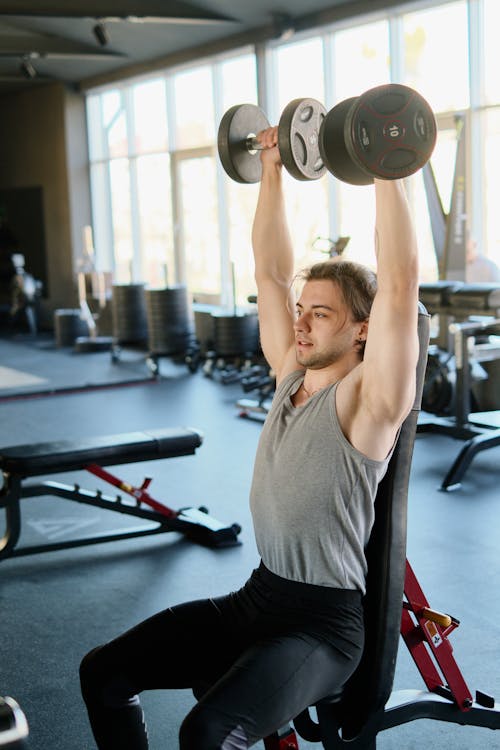
2. Shelf Reach (Overhead Press)
Stand with feet shoulder-width apart. Hold a weight in each hand at shoulder height. Press both arms overhead until fully extended, pause, and lower with control. Perform 10-12 repetitions. Start with light weights and increase as comfortable.
Daily task: Placing items on high shelves, reaching into cupboards, hanging
washing on a line.
Muscles worked: Shoulders, triceps, upper back, and core stability.
3. Shoe-Tying Squat (Supported Squat)
Stand behind a sturdy chair, holding the backrest lightly. Lower yourself by bending your knees and pushing your hips back, as if sitting into an invisible chair. Go as low as comfortable, pause, and stand back up. Perform 10-12 repetitions. Keep your weight in your heels and your knees tracking over your toes.
Daily task: Getting in and out of chairs, using the toilet, picking things up
from low surfaces, getting into a car.
Muscles worked: Quadriceps, glutes, hamstrings, and core.
4. Garden Bend (Hip Hinge with Reach)
Stand with feet hip-width apart. Keeping your back straight, hinge forward from your hips (imagine closing a door with your bottom), reaching your hands toward the floor. Go as far as comfortable, feeling a stretch in the back of your legs. Return to standing by squeezing your glutes. Perform 10-12 repetitions. Hold a light weight for progression.
Daily task: Bending to load the dishwasher, picking up items from the floor,
gardening, putting on shoes and socks.
Muscles worked: Hamstrings, glutes, lower back, and core.
5. Door Push (Wall Push-Up)
Stand arm's length from a wall with hands flat on the wall at shoulder height. Bend your elbows to bring your chest toward the wall, then push back to the start. Perform 12-15 repetitions. Progress by moving to a kitchen worktop (lower angle) or eventually a standard push-up position.
Daily task: Pushing open heavy doors, pushing a hoover, pushing yourself up
from a lying or seated position.
Muscles worked: Chest, shoulders, triceps, and core stability.
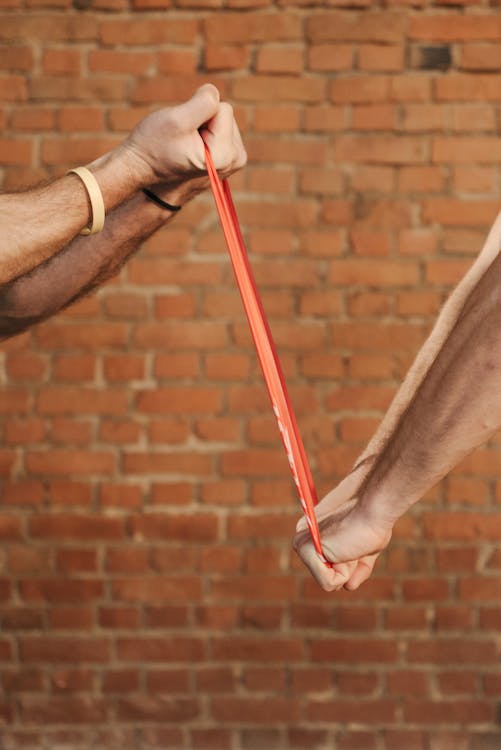
6. Pulling Strength (Resistance Band Row)
Attach a resistance band to a door handle at waist height (or loop it around a banister). Holding both ends, step back until there is tension. Pull the band toward your ribcage, squeezing your shoulder blades together. Slowly release. Perform 12-15 repetitions. Use a stronger band as you progress.
Daily task: Opening drawers, pulling curtains, pulling a suitcase, pulling
weeds in the garden.
Muscles worked: Upper back, biceps, rear shoulders, and grip.
7. Getting Up from the Floor (Turkish Get-Up Progression)
From a seated position on the floor, practise standing up using as little hand support as possible. Start by placing one hand on the floor, bringing one knee up, and pushing yourself to standing. Reverse the movement to sit back down. Practise 3-5 repetitions each side. Use a chair for support if needed and reduce support over time.
Daily task: Getting up after playing with grandchildren, recovering from a
fall, getting up from floor-level activities.
Muscles worked: Full body: legs, core, shoulders, and coordination.
Making the Connection: Exercise to Daily Life
The beauty of functional fitness is that improvements show up in everyday moments. You may notice that you can carry all the shopping in one trip instead of two, that reaching for items on the top shelf feels effortless, or that getting in and out of the car no longer requires planning the movement.
These are not small achievements. They are the practical markers of genuine fitness, and they matter far more than any gym statistic. The core strength guide covers the stability foundation that supports all functional movements, while our lower body strength guide provides additional leg and hip exercises.
Making It Harder: Progressive Challenge
As exercises become comfortable, your body needs increased challenge to keep improving. Here are safe ways to progress each exercise.
- Increase weight: Use heavier items for the carry, press, and hinge exercises. Even a small increase creates new demands on your muscles.
- Add repetitions: Work from 10 to 12 to 15 repetitions before increasing weight.
- Slow the tempo: Taking 3 seconds to lower yourself in each squat or push-up dramatically increases the training effect.
- Reduce support: Gradually use less chair support for squats, move from wall to worktop for push-ups, and reduce hand support when getting up from the floor.
- Single-leg variations: Once double-leg exercises feel manageable, try single-leg versions for an additional balance and strength challenge.
Your Weekly Functional Fitness Routine
Here is how to structure the seven exercises into a manageable weekly programme.
- Sessions per week: 2-3 times, with at least one rest day between sessions.
- Warm-up (5 minutes): Gentle walking on the spot and arm circles.
- Main exercises (20 minutes): All 7 exercises with 30-60 seconds rest between each.
- Cool-down (5 minutes): Gentle stretching of the main muscle groups used.
- Total time: Approximately 25-30 minutes per session.
This routine, done consistently, builds the practical strength that supports independent daily living. Every exercise has a direct connection to a real-world task, so every session is an investment in your capability.
Frequently Asked Questions
What is the difference between functional fitness and regular strength training?
Traditional strength training often isolates individual muscles using machines or specific exercises. Functional fitness focuses on movement patterns that involve multiple joints and muscles working together, replicating the way your body moves during daily tasks. Both are valuable, and the most effective programme combines elements of each.
Do I need gym equipment for functional fitness?
No. The most effective functional exercises use your body weight, household items (tins, water bottles, shopping bags), and a resistance band. These tools are inexpensive and allow you to train at home with no gym membership required. As you progress, you may choose to add dumbbells, but they are not essential.
How soon will I notice improvements in daily tasks?
Most people notice improvements within 3-4 weeks of regular practice. You may find that carrying shopping feels lighter, getting out of chairs is easier, or bending to pick things up requires less effort. These improvements tend to be gradual but unmistakable once you start looking for them.
References
- NHS. Strength and flexibility exercises. nhs.uk
- Age UK. Staying active. ageuk.org.uk
- Chartered Society of Physiotherapy. Keeping active and healthy. csp.org.uk