A chair isn't a compromise - it's a training tool. Chair-based exercises build real, measurable strength, improve cardiovascular fitness, and enhance flexibility. Whether you're recovering from surgery, managing a condition that affects your mobility, or simply prefer a seated starting point, these twelve exercises deliver genuine results. Your muscles don't know whether you're sitting or standing. They respond to challenge, and that's exactly what a well-designed chair workout provides.
These exercises build the functional fitness you need for daily life - the strength to carry shopping bags, the endurance to enjoy a full day out, and the mobility to move with ease.
Why Chair Exercises Build Real Strength
Muscle fibres respond to resistance, regardless of your body position. When you press, pull, lift, or hold against resistance from a seated position, the same physiological processes occur: muscle fibres contract, micro-tears repair stronger, and over time you build measurable strength and endurance. Research published in the British Journal of Sports Medicine confirms that seated resistance exercise produces significant strength gains comparable to standing alternatives.
Chair exercises also offer distinct advantages. A stable base of support means your core works to maintain posture without the balance demands of standing exercises. This allows you to focus entirely on the muscles you're targeting and often lift heavier or perform more repetitions than you could standing. For many people, chair exercises are not the easier option - they're the smarter one.
Beyond strength, seated exercise improves circulation, joint mobility, and cardiovascular fitness. A well-designed chair workout can raise your heart rate, challenge your muscles, and leave you feeling energised - all from a seated position.
Setting Up Safely: Chair Selection and Positioning
The right setup makes your chair workout safer and more effective. Here's what to look for.
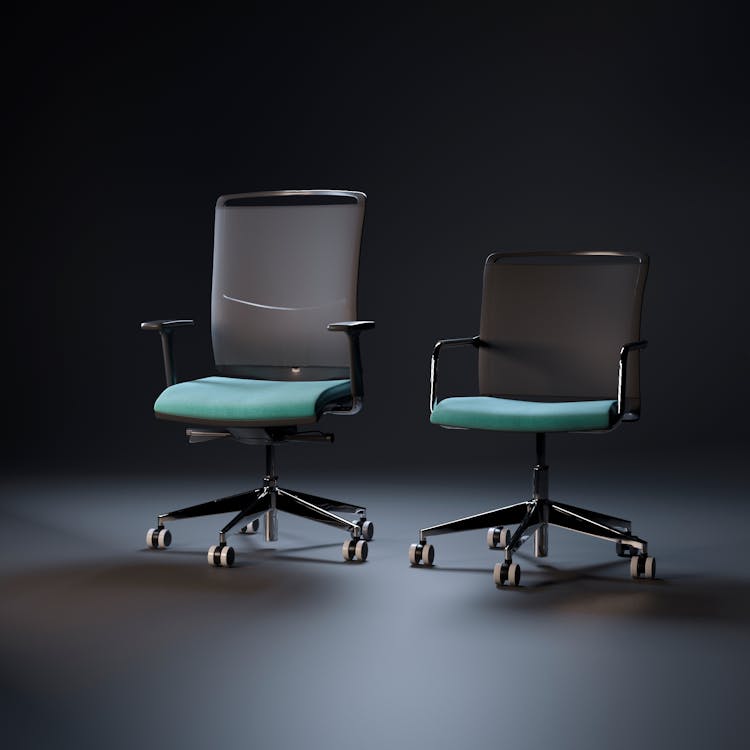
- Chair type: Use a sturdy, armless chair with a flat seat. Kitchen or dining chairs work well. Avoid office chairs with wheels, rocking chairs, or anything that might slide or tip.
- Seat height: When seated, your feet should rest flat on the floor with knees bent at roughly 90 degrees. If the chair is too high, place a firm cushion under your feet.
- Position: Place the chair on a non-slip surface. If you're on a hard floor, position the chair against a wall for added stability during more challenging exercises.
- Space: Allow arm's length of clear space on both sides and in front. This gives you room for full range of motion without bumping furniture.
- Posture: Sit toward the front half of the chair so your back isn't resting against the backrest. This engages your core and allows full movement range. Feet flat, shoulders relaxed, chest lifted.
Upper Body: 4 Chair Exercises for Arms, Shoulders, and Back
1. Seated Overhead Press
Hold a weight (tinned food, water bottles, or dumbbells) in each hand at shoulder height, palms facing forward. Press both arms straight overhead until your arms are fully extended. Lower slowly to shoulder height. Perform 10-12 repetitions.
Muscles worked: Shoulders, triceps, upper back. This mirrors the movement of placing items on high shelves.
2. Seated Row
Loop a resistance band around both feet and hold one end in each hand. Sit tall and pull the band back, squeezing your shoulder blades together. Hold for a second, then release slowly. Perform 12-15 repetitions.
Muscles worked: Upper back, rear shoulders, biceps. Strengthens the muscles that support good posture and healthy shoulders.
3. Bicep Curls
Hold weights at your sides with palms facing forward. Bend your elbows to curl the weights toward your shoulders, keeping your elbows close to your body. Lower with control. Perform 10-12 repetitions.
Muscles worked: Biceps, forearms. These muscles power everyday lifting and carrying tasks.
4. Chest Press with Band
Wrap a resistance band around your back at chest height, holding one end in each hand. Press both arms forward until nearly straight, then slowly return. Keep your core engaged and avoid arching your back. Perform 10-12 repetitions.
Muscles worked: Chest, front shoulders, triceps. Builds the pushing strength used for opening doors and getting up from surfaces.
Lower Body: 4 Chair Exercises for Legs and Hips
5. Seated Marching
Sit tall and lift your right knee toward the ceiling as high as comfortable. Lower and repeat with the left knee. Maintain a steady rhythm, as if marching in place. Perform 20 marches per leg (40 total).
Muscles worked: Hip flexors, quadriceps. This exercise also raises your heart rate and improves hip mobility.
6. Seated Leg Extension
Sit with your back straight. Slowly extend your right leg until it's straight out in front of you, foot flexed. Hold for 3 seconds, then lower slowly. Perform 10 repetitions per leg. Add an ankle weight as you progress.
Muscles worked: Quadriceps. Strong quadriceps are essential for standing from a chair, climbing stairs, and walking confidently.
7. Seated Heel Raises
Keep your toes on the floor and raise both heels as high as possible. Hold at the top for 2 seconds, then lower slowly. Perform 15-20 repetitions. Progress by doing one leg at a time.
Muscles worked: Calves. Calf strength supports ankle stability, walking endurance, and circulation in the lower legs.
8. Seated Hip Abduction
Place a resistance band around both thighs just above the knees. Press your knees apart against the band's resistance. Hold for 3 seconds, then slowly return. Perform 12-15 repetitions. Without a band, press your hands against the outside of your knees for resistance.
Muscles worked: Hip abductors (outer thighs and glutes). These muscles stabilise your pelvis when walking and help with balance confidence.
Core: 4 Exercises from a Seated Position
9. Seated Knee Lift and Hold
Sit tall without leaning against the backrest. Lift both feet 5-10 centimetres off the floor and hold. Start with 10 seconds and build to 30. Keep breathing throughout - this is harder than it sounds.
Muscles worked: Deep core stabilisers, hip flexors. This is one of the most effective seated core exercises because it challenges your stability without spinal movement.
10. Seated Torso Rotation
Hold a weight or ball at chest height with both hands. Keeping your hips facing forward, rotate your torso to the right, then to the left. Move slowly and with control. Perform 10 rotations each side.
Muscles worked: Obliques, deep core muscles. Rotational strength supports reaching, turning, and twisting movements in daily life.
11. Seated Side Bend
Sit tall with arms at your sides. Slide your right hand down toward the floor, bending from your waist. Return to upright, then repeat on the left. Perform 10 repetitions per side. Hold a light weight for extra challenge.
Muscles worked: Obliques, lateral core. This improves side-to-side stability and the ability to reach in different directions.
12. Seated Pelvic Tilt
Sit toward the front of the chair. Gently rock your pelvis forward (arching your lower back slightly) then backward (flattening your lower back). Move slowly and smoothly. Perform 10-15 repetitions.
Muscles worked: Lower abdominals, lower back. This gentle exercise mobilises the lower spine and activates the deep core muscles that support posture.
Building a Routine: Your 20-Minute Chair Workout
Combine the exercises above into this efficient, complete workout. Perform it 2-3 times per week, with at least one rest day between sessions.
Warm-Up (3 minutes)
- Seated marching: 1 minute
- Arm circles (forward and backward): 1 minute
- Gentle torso rotations: 1 minute
Strength Circuit (14 minutes)
Perform each exercise for the recommended repetitions, resting 15-30 seconds between exercises.
- Seated overhead press: 10-12 reps
- Seated leg extension: 10 reps per leg
- Seated row: 12-15 reps
- Seated hip abduction: 12-15 reps
- Bicep curls: 10-12 reps
- Seated heel raises: 15-20 reps
- Seated knee lift and hold: 3 x 10 seconds
- Seated torso rotation: 10 reps per side
Cool-Down (3 minutes)
- Gentle neck stretches (side to side, forward): 30 seconds each
- Seated hamstring stretch: 30 seconds per leg
- Cross-body shoulder stretch: 30 seconds per arm
- Deep breathing: 30 seconds
Progressing: Making Chair Exercises More Challenging
As exercises become comfortable, you can increase the challenge without changing position. Progress is what transforms good exercise into great results.
- Add resistance: Use heavier weights, stronger resistance bands, or ankle weights. Even small increases create new challenges for your muscles.
- Increase repetitions: If 10 repetitions feel easy, work toward 15, then 20. More repetitions build muscular endurance alongside strength.
- Slow the tempo: Taking 3 seconds to lift and 3 seconds to lower dramatically increases time under tension, which is a powerful stimulus for strength gains.
- Reduce rest time: Shorter rest periods between exercises increase cardiovascular challenge and workout efficiency.
- Add pauses: Hold the hardest point of each exercise for 2-3 seconds. This isometric hold builds strength at the most challenging range of motion.
- Combine movements: A bicep curl combined with an overhead press works more muscles and adds coordination challenge.
Our getting started guide explains how to begin safely and progress at the right pace for your current fitness level.
For those ready to explore standing exercises alongside chair work, our comprehensive strength training guide provides a full progression pathway.
Frequently Asked Questions
Are chair exercises effective for building real strength?
Absolutely. Your muscles respond to resistance regardless of your body position. Seated exercises with appropriate resistance produce measurable strength gains comparable to standing exercises. The key is progressive overload - gradually increasing the challenge over time, which works the same way whether seated or standing.
How often should I do chair exercises?
Aim for 2-3 sessions per week with at least one rest day between strength sessions. This gives your muscles time to recover and grow stronger. On non-strength days, gentle seated stretching or light seated marching keeps you active without overloading your muscles.
Can I transition from chair exercises to standing exercises over time?
Many people use chair exercises as a foundation and gradually incorporate standing exercises as their strength and confidence grow. The strength you build from a seated position directly transfers to standing movements. Your coach or physiotherapist can help you plan this transition at the right pace.
References
- NHS. Strength and flexibility exercises. nhs.uk
- Chartered Society of Physiotherapy. Exercise advice. csp.org.uk
- Age UK. Exercise and physical activity. ageuk.org.uk