Living with COPD does not mean giving up on being active. In fact, the right breathing exercises and physical activity can significantly improve your quality of life, reduce breathlessness, and help you do more of the things you enjoy. Pulmonary rehabilitation - a combination of exercise and education - is one of the most effective treatments available for COPD, yet many people are never offered it or do not know what it involves. This guide shares evidence-based breathing techniques and exercises you can start using today, whether you are waiting for a rehabilitation programme or looking to build on one you have already completed.
Understanding Breathlessness and Exercise
If you have COPD, you already know that breathlessness is a daily reality. What you might not know is that avoiding activity because of breathlessness actually makes it worse over time. When you stop moving, your muscles weaken, your body becomes less efficient at using oxygen, and even small tasks leave you more out of breath than before. It becomes a vicious cycle.
The good news is that this cycle can be reversed. The British Lung Foundation explains that regular exercise trains your muscles to work more efficiently with less oxygen, reduces the ventilatory demand of everyday activities, and improves your body's ability to deliver oxygen where it is needed. You will not change your lung function, but you will change how well your body copes with the lungs you have.
Feeling breathless during exercise is expected and not dangerous. Learning to distinguish between normal exercise breathlessness (which is safe) and warning signs (which need attention) is an important part of exercising confidently with COPD.
Breathing Exercises for COPD Management
These five breathing techniques are recommended by the NHS and British Lung Foundation. Practise them daily, ideally for around 15 minutes. They help you manage breathlessness during exercise and everyday activities.
Step 1: Pursed Lip Breathing (3 minutes)
This is the single most useful breathing technique for COPD. Breathe in gently through your nose for 2 counts. Then breathe out slowly through pursed lips (as if blowing out a candle) for 4 counts. The slow exhale creates back-pressure that keeps your airways open longer, allowing trapped air to escape. Practise at rest first, then use it during activity whenever you feel breathless. This technique can be used anywhere - walking, climbing stairs, or during exercise.
Step 2: Diaphragmatic Breathing (3 minutes)
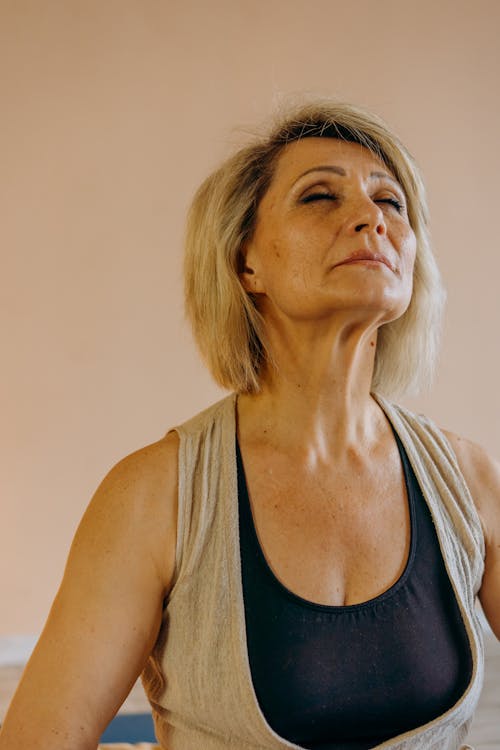
Sit comfortably or lie on your back with knees bent. Place one hand on your chest and one on your stomach. Breathe in slowly through your nose, feeling your stomach rise while your chest stays relatively still. Breathe out through pursed lips, feeling your stomach fall. This engages your diaphragm - the most efficient breathing muscle - rather than relying on the smaller, less effective chest muscles. Aim for 5-10 slow breaths.
Step 3: Paced Breathing (3 minutes)
This technique synchronises your breathing with movement. During any activity, breathe in before the effort and breathe out during the effort. For example, when climbing stairs: breathe in while standing still, breathe out as you take a step. When lifting: breathe in at the bottom, breathe out as you lift. Practise by walking slowly around your room, breathing in for 2 steps and out for 3 steps. Adjust the ratio to whatever feels comfortable.
Step 4: Blow-As-You-Go Technique (3 minutes)
This is specifically designed for moments of exertion. Before you make the effort (bending down, standing up, pushing a door), breathe in. As you make the effort, blow out steadily. This prevents you from holding your breath during exertion, which many people do instinctively and which increases breathlessness. Practise by standing up from a chair: breathe in while seated, blow out as you stand. Repeat 5-8 times.
Step 5: Recovery Position Breathing (3 minutes)
When you feel very breathless, adopt a position that makes breathing easier. Stand leaning slightly forward with your hands on your thighs, or lean forward in a chair with your elbows on your knees. These positions give your diaphragm more room to work. Use pursed lip breathing in this position until your breathing settles. Practise moving into this position quickly so it becomes second nature when you need it.
Safe Exercise with COPD
Beyond breathing exercises, regular physical activity is essential for managing COPD effectively. The NHS recommends that people with COPD aim for the same activity levels as everyone else: 150 minutes of moderate activity per week. This might feel ambitious, but you can build up gradually from wherever you are now.
Best Exercises for COPD
- Walking: The most accessible and well-researched exercise for COPD. Start with whatever distance you can manage without severe breathlessness and add a little each week
- Cycling: Stationary cycling is excellent because you can control the intensity precisely and stop whenever you need to
- Swimming: The warm, humid environment can make breathing easier, and water supports your body weight
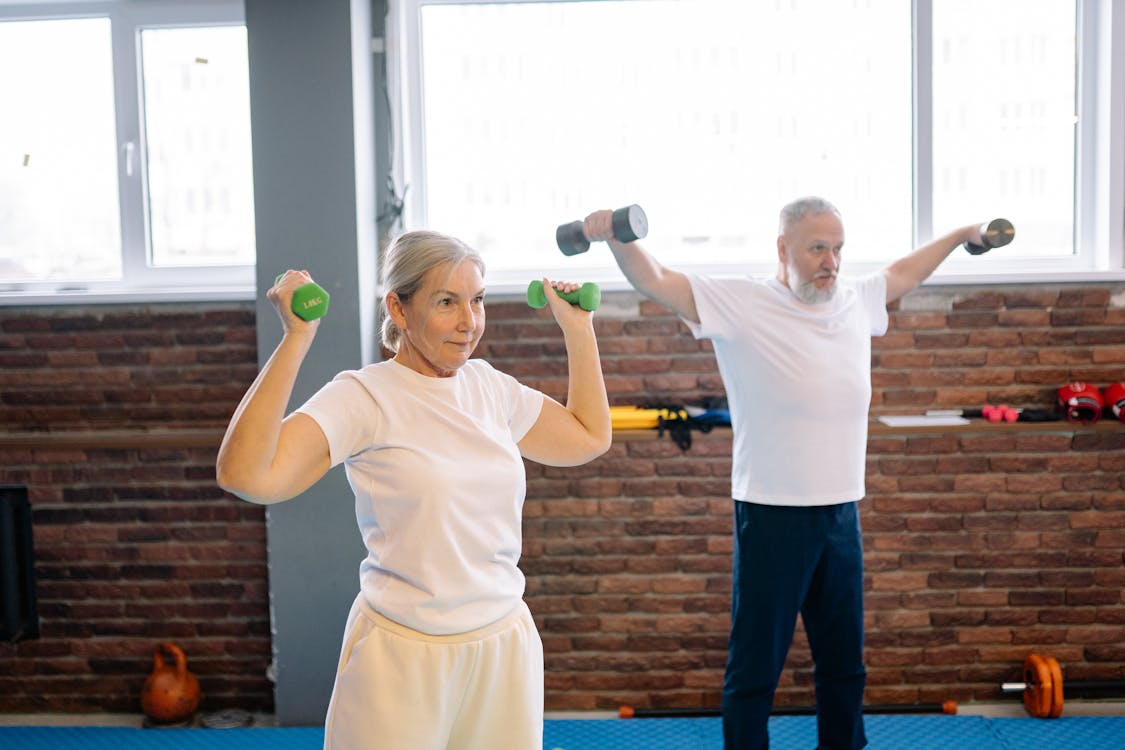
- Strength training: Stronger muscles use oxygen more efficiently. Focus on legs (for walking and stairs) and arms (for daily tasks)
- Tai chi: Combines gentle movement with breathing control - particularly well-suited to COPD management
How Hard Should You Exercise?
With COPD, some breathlessness during exercise is normal and expected. Use the Borg scale (0-10) to gauge your effort:
- 0-2: Too easy - you will not gain much benefit
- 3-4: Moderate - breathing is noticeable but manageable. This is your target zone
- 5-6: Hard but achievable for short periods
- 7+: Too hard - reduce intensity and use recovery breathing
The key principle is that being breathless during exercise is safe. You are not damaging your lungs. However, if breathlessness does not settle within a few minutes of stopping, or if you experience chest pain, dizziness, or unusual symptoms, stop and seek advice.
What Is Pulmonary Rehabilitation?
Pulmonary rehabilitation (PR) is a structured programme of exercise and education specifically designed for people with lung conditions. NICE recommends it for everyone with COPD who feels breathless during everyday activities. A typical programme runs for 6-8 weeks, with two supervised sessions per week.
Research consistently shows that PR improves exercise capacity, reduces breathlessness, improves quality of life, and reduces hospital admissions. If you have not been offered pulmonary rehabilitation, ask your GP or respiratory nurse for a referral. It is one of the most effective interventions available for COPD.
After completing pulmonary rehabilitation, maintaining your exercise habits is crucial. Many people find that joining a regular exercise group helps them keep going. For those in the North East, our Redefine programme provides the kind of structured, supportive environment that helps you maintain the gains from PR. For broader guidance on exercising with health conditions, see our comprehensive health conditions guide.
When to Stop and Seek Help
While breathlessness during exercise is normal with COPD, certain symptoms require immediate attention:
- Chest pain or tightness that does not ease when you stop
- Breathlessness that does not improve within 5-10 minutes of resting
- Dizziness, faintness, or confusion
- Coughing up blood
- Significant worsening of your usual symptoms
If you experience any of these, stop exercising and contact your GP or respiratory team. If you have chest pain or feel very unwell, call 999.
Frequently Asked Questions
Is it safe to exercise with COPD?
Yes - exercise is one of the most beneficial things you can do for COPD. The British Lung Foundation, NHS, and NICE all recommend regular physical activity for people with COPD. Feeling breathless during exercise is normal and not dangerous. The key is starting at a level you can manage and building up gradually. If you are unsure, ask your GP for a referral to pulmonary rehabilitation, which provides supervised exercise tailored to your condition.
Will exercise improve my lung function?
Exercise does not reverse the lung damage caused by COPD, but it significantly improves how well your body copes with reduced lung function. Your muscles become more efficient at using oxygen, your heart pumps more effectively, and everyday activities become less tiring. Most people who exercise regularly with COPD report feeling noticeably less breathless during daily tasks, even though their lung test results may not change dramatically.
How often should I exercise with COPD?
The NHS recommends aiming for 150 minutes of moderate activity per week, which works out to about 30 minutes on 5 days. However, any increase from your current activity level is beneficial. If you can only manage 5 minutes at a time, start there and build up gradually. Consistency matters more than duration. Even three 10-minute sessions a day count towards your weekly total.
References
- British Lung Foundation. Keeping active with a lung condition. blf.org.uk
- NHS. Chronic obstructive pulmonary disease (COPD) - treatment. nhs.uk
- NICE. Chronic obstructive pulmonary disease in over 16s: diagnosis and management. nice.org.uk