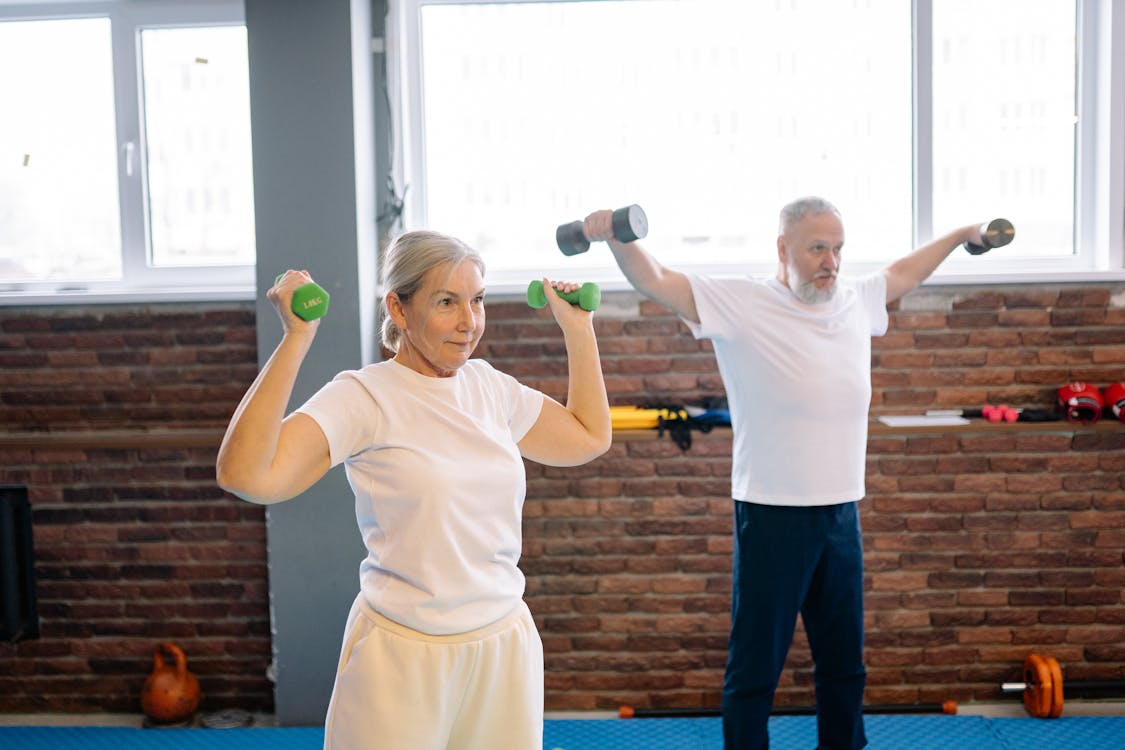
Vertigo and dizziness can make exercise feel impossible - or even frightening. When the room spins or the ground seems to shift beneath your feet, the natural response is to stay still and avoid anything that might trigger an episode. But here is what many people do not realise: specific exercises can actually reduce vertigo and dizziness, and staying active is one of the best ways to prevent episodes from recurring. This guide explains which exercises help, how to exercise safely when you experience dizziness, and when to seek medical attention.
Understanding Vertigo and Dizziness
Vertigo and dizziness are not the same thing, though people often use the words interchangeably. Understanding the difference helps you choose the right approach.
- Vertigo: A false sensation that you or your surroundings are spinning or moving. It is caused by a problem in the inner ear or brain's balance system
- Dizziness: A broader term covering lightheadedness, unsteadiness, or feeling faint. It can have many causes including low blood pressure, medication, dehydration, or inner ear problems
- BPPV (Benign Paroxysmal Positional Vertigo): The most common cause of vertigo, triggered by certain head movements. It is caused by tiny calcium crystals becoming displaced in the inner ear
The NHS reports that BPPV accounts for around half of all vertigo cases and is particularly common in adults over 50. The good news is that it responds extremely well to specific exercises and repositioning manoeuvres, often resolving completely within a few weeks.
Vestibular Exercises for Dizziness Management
Vestibular rehabilitation exercises work by retraining your brain to process balance signals correctly. They may briefly provoke mild dizziness - this is expected and actually part of the healing process. Your brain needs to experience and adapt to the signals that trigger dizziness. The following routine takes around 10 minutes. Practise twice daily for best results.
Step 1: Eye Tracking (2 minutes)
Sit in a comfortable chair. Hold your thumb at arm's length directly in front of you. Keep your head still and follow your thumb with your eyes as you move it slowly to the left, then to the right, then up, then down. Move your thumb about 30 centimetres in each direction. Do 10 repetitions in each direction. This exercise recalibrates the connection between your eyes and your balance system. If this provokes dizziness, slow down the movement.
Step 2: Head Turns with Focus (2 minutes)
Sit comfortably and focus on a fixed point at eye level - a picture on the wall or a doorknob. Slowly turn your head to the left while keeping your eyes fixed on the target. Return to centre. Turn to the right while keeping eyes on the target. Do 10 repetitions each way. This exercise challenges your vestibular system to maintain stable vision during head movement, which is exactly the skill that vertigo disrupts.
Step 3: Seated Weight Shifts (3 minutes)
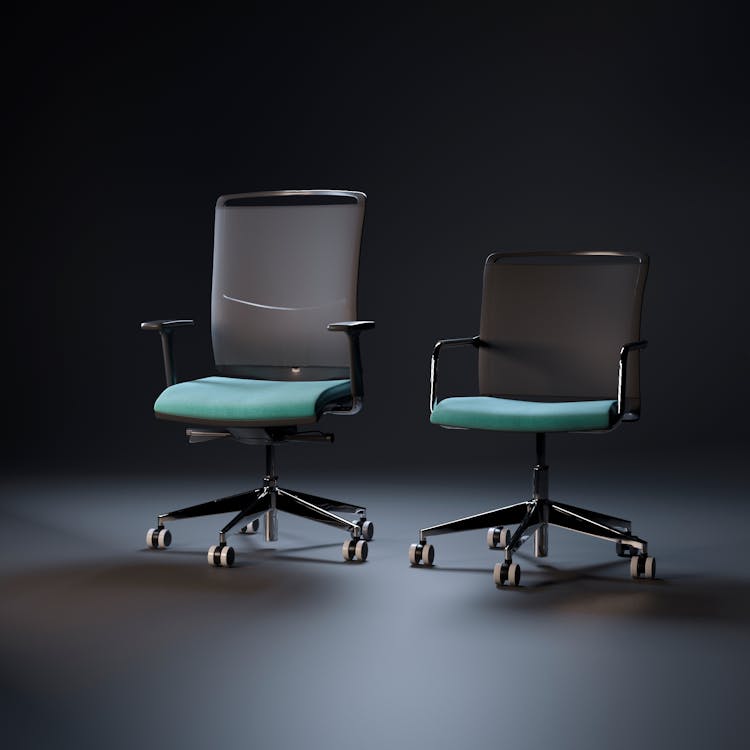
Sit on a firm chair without armrests (keep a table nearby for support if needed). Slowly shift your weight to the left, leaning slightly, then return to centre. Shift to the right and return. Lean slightly forward and return. Do 8 repetitions in each direction. As confidence grows, make the shifts larger. This challenges your balance system in a safe, supported position.
Step 4: Standing Balance with Head Turns (2 minutes)
Stand near a worktop or wall for safety. Stand with feet hip-width apart. Slowly turn your head to look over your left shoulder, then your right shoulder, while maintaining your balance. Do 8 repetitions each way. If this feels too challenging, start with feet wider apart or keep one hand on the worktop. Progress to standing with feet together, then with eyes closed, as your balance improves. This is an excellent exercise for building real-world balance confidence.
Step 5: Marching on the Spot (1 minute)
Stand near a support surface. March on the spot with a gentle rhythmic movement, lifting your knees to a comfortable height. Start with 30 seconds and build to 1 minute. If comfortable, add gentle head turns while marching. This integrates balance, movement, and vestibular challenge in a functional pattern.
These exercises are based on programmes recommended by the NHS and the Brain & Spine Foundation. If your symptoms worsen significantly or do not improve after 4-6 weeks of daily practice, speak with your GP about a referral to a vestibular physiotherapist.
Exercising Safely with Dizziness
Beyond vestibular exercises, staying physically active is important for overall health and actually helps prevent dizziness by improving cardiovascular function, blood pressure regulation, and general balance. Here are modifications that make exercise safer.
General Safety Principles
- Always have support nearby: Exercise near a wall, worktop, or sturdy chair. Use a walking stick outdoors if needed
- Move slowly between positions: Changing from lying to sitting or sitting to standing can trigger dizziness. Pause at each stage
- Stay hydrated: Dehydration is a common and easily preventable cause of dizziness
- Avoid overheating: Exercise in cool, well-ventilated spaces. Heat can worsen dizziness
- Tell your instructor: If exercising in a group, let the instructor know about your dizziness so they can suggest modifications
Exercise Modifications
- Avoid exercises lying flat on your back: These can trigger BPPV symptoms. Use an inclined position instead
- Limit rapid head movements: Slow, controlled movements are safer than quick changes of direction
- Use seated alternatives: On days when dizziness is worse, switch to chair-based exercises
- Choose stable surfaces: Exercise on firm, flat ground rather than soft or uneven surfaces
- Prefer stationary cycling over walking: The fixed position provides stability while still giving excellent cardiovascular exercise
Building Balance Confidence
People who experience vertigo or dizziness are at higher risk of falls, which makes balance training particularly important. The Meniere's Society emphasises that regular balance practice helps your brain compensate for vestibular problems, gradually reducing both dizziness and fall risk.
Effective balance exercises include:
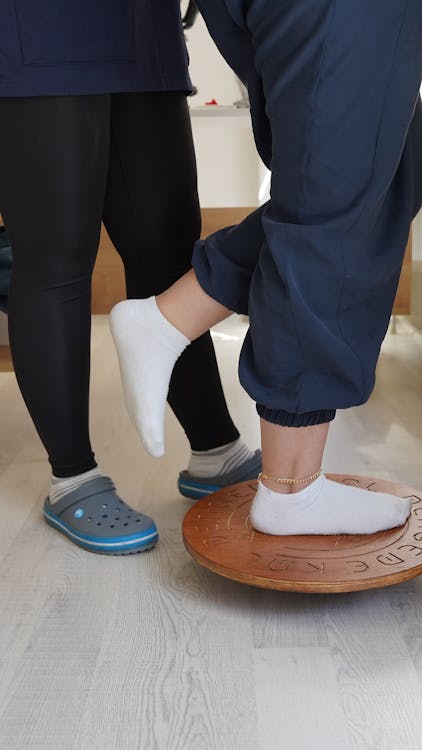
- Standing on one leg (with support nearby) - start with 10 seconds and build up
- Heel-to-toe walking along a hallway (one hand on the wall for safety)
- Standing on a folded towel to challenge balance on a softer surface
- Tai chi - excellent evidence for improving balance and reducing dizziness
For a comprehensive approach to balance training, see our guide to fall prevention and balance and our health conditions exercise guide.
When Dizziness Needs Medical Attention
While most dizziness is benign and responds well to exercise, certain symptoms require prompt medical attention. See your GP urgently or attend A&E if you experience:
- Sudden severe vertigo with hearing loss in one ear
- Dizziness with double vision, slurred speech, or weakness on one side (these could indicate a stroke - call 999)
- Dizziness with severe headache, especially if sudden onset
- Vertigo lasting more than 24 hours without improvement
- Dizziness after a head injury
- Fainting or loss of consciousness
For recurring vertigo without these warning signs, your GP can assess the cause and may refer you to an ENT specialist or vestibular physiotherapist. BPPV can often be resolved with a single treatment called the Epley manoeuvre, which your GP or physiotherapist can perform.
Frequently Asked Questions
Can exercise make vertigo worse?
Vestibular exercises may briefly provoke mild dizziness - this is expected and actually part of the healing process. Your brain needs to experience and adapt to the signals that trigger dizziness in order to recalibrate. However, if exercise consistently makes your vertigo significantly worse or triggers prolonged episodes, stop and consult your GP or vestibular physiotherapist. They can ensure you are doing the right exercises for your specific type of dizziness.
How long does it take for vestibular exercises to work?
Most people notice some improvement within 2-4 weeks of daily practice. For BPPV, the improvement can be much faster - sometimes within days. For other vestibular conditions, it may take 6-12 weeks of consistent daily practice. The Brain & Spine Foundation recommends continuing exercises for at least 6 weeks before assessing whether they are working. If there is no improvement after this time, ask your GP about referral to a vestibular specialist.
What is the best exercise for someone with recurrent dizziness?
Walking is the most recommended exercise because it challenges your balance system naturally while being easy to control. Start with short, flat routes with rest stops available. Stationary cycling is an excellent alternative on days when balance feels less reliable, as it provides cardiovascular exercise from a stable, seated position. Tai chi has strong evidence for improving balance in people with dizziness. The best exercise is one you will do consistently and feel safe performing.
References
- NHS. Vertigo. nhs.uk
- Meniere's Society. Vestibular rehabilitation. menieres.org.uk
- Brain & Spine Foundation. Dizziness and balance problems. brainandspine.org.uk